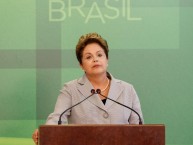
Leading presidential challengers took turns focusing attacks on the country’s recent economic performance in a second televised presidential debate Monday, leaving incumbent President Dilma Rousseff alone to defend the government’s policies. Top challengers Marina Silva and Aécio Neves questioned the effectiveness of the Rousseff administration in the face of recent poor economic data, causing the president to re-iterate the government’s claim that a contraction of the gross domestic product posted in the second quarter was “momentary.” Brazil’s economy registered a 0.6% contraction in the quarter, putting the country into a technical recession. “I believe that in the next quarter and the second half we will have a great recovery,” Ms. Rousseff said. The polling frontrunner Ms. Silva, however, also faced intense questioning from journalists and candidates on alleged inconsistencies and changes in her platform, especially on matters related to social and energy policies. Ms. Rousseff suggested that Ms. Silva, a leading environmental advocate in Brazil, was not giving due importance to resources from the country’s pre-salt off-shore oil fields, and questioned where the candidate would find some $60 billion in revenues needed to finance her campaign proposals. Challenger Aécio Neves, of the Social Democratic party, was also on the attack during the event, criticizing lack of government investment in law enforcement and education, as well as an alleged aversion of Ms. Rousseff’s Workers’s Party to forming partnerships with the private sector. According to recent opinion polls, Ms. Rousseff and Ms. Silva are tied in public support ahead of presidential elections scheduled for October. Mr. Neves is running a distant third place. In addition to the three frontrunners, the debate Monday also included participation from candidates Eduardo Jorge, Luciana Genro, Levy Fidelix and Everaldo Dias Pereira.